PadSplit has quickly become one of the more interesting models in real estate investing. It sits somewhere between traditional rentals and multifamily, creating a structure where investors can generate higher total income from a single property while also providing more accessible housing.
If you’re exploring the model, the opportunity is real—but so are the nuances.
This breakdown covers what PadSplit is, how it compares to traditional rentals, and what actually matters when you’re trying to find and operate properties that perform.

What is a PadSplit?
PadSplit is a co-living platform designed around renting individual rooms within a shared home.
Instead of leasing a property to a single tenant, each room is rented separately to working professionals, typically creating a higher total gross income across the property.
The model is built around a simple idea: provide clean, affordable housing while allowing property owners to generate stronger returns.
That combination is what has driven its growth.

Why Investors Are Paying Attention
In most markets today, traditional rental investing has become more compressed. Higher interest rates, tighter margins, and slower rent growth have made it harder to find properties that cash flow well as standard long-term rentals.
PadSplit introduces a different structure.
By increasing the number of rentable units within a home and optimizing the layout, investors can often generate significantly more income from the same asset. But that doesn’t mean every property works.
PadSplit VS Traditional Rentals

There are a few key differences that stand out immediately.
Income Potential
The most obvious difference is total gross income. By renting rooms individually, properties can often generate 2–3x the gross rent of a traditional single-family lease, depending on the layout and market.
Vacancy Profile
PadSplit behaves more like a small multifamily property.
Even if one or two rooms are vacant, the rest of the home continues producing income. That creates more stability compared to a single-tenant rental, where vacancy means zero revenue.
Management Structure
One of the more unique aspects of PadSplit is how much of the operational layer is handled within the platform.
Tenant placement, payments, and basic coordination are centralized, while the host focuses primarily on maintaining the physical property.
In practice, this creates a hybrid model. It is less hands-on than managing multiple individual tenants directly, but still requires consistent oversight of the home itself.
Conversion and Setup
PadSplit requires a different upfront approach.
Maximizing performance usually involves:
- Adding bedrooms where possible
- Furnishing rooms
- Installing locks and safety features
- Meeting platform-specific requirements
These costs need to be factored in early, but they are directly tied to the income potential of the property.
Amenities and Experience
The properties that perform best tend to offer a consistent experience. Things like reliable WiFi, clean common areas, and predictable house rules go a long way in keeping occupancy high and turnover low.
We include personal workstations in all of our rooms to accommodate those who work from home. Some hosts go even further with amenities like TVs, kitchen appliances, etc. These are not always necessary, though, and can be costly to repair and replace over time.
What actually makes a property work
Not every home is a good fit for PadSplit. The ones that tend to perform well usually have some flexibility in the layout so you can add bedrooms, enough parking to support multiple tenants, and decent access to jobs or public transportation. You also want to avoid properties with HOA restrictions that can shut the whole thing down.
Beyond that, it really comes down to how well the space can be converted and how efficiently it operates once it’s live.
A strong PadSplit deal isn’t just about the purchase price. It’s about what the property looks like after you’ve optimized it. Converting space into rooms is important, but consider the amount of bathrooms available, too. Rooms with shared baths go for less than those with ensuite bathrooms, so consider the trade off. Garage bedroom conversions are also very popular and in some cases can provide private access which is another positive for rentability.
A real example
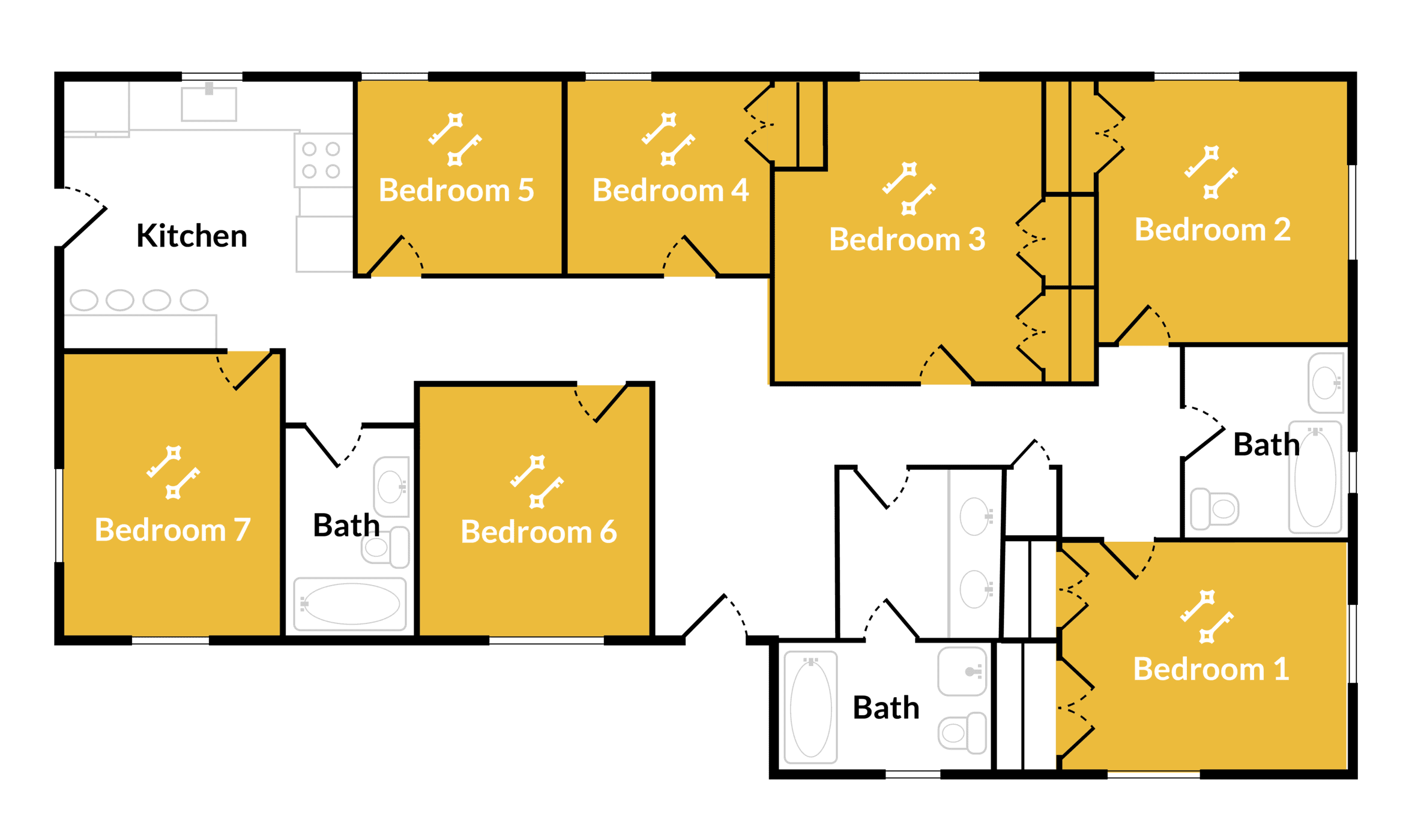
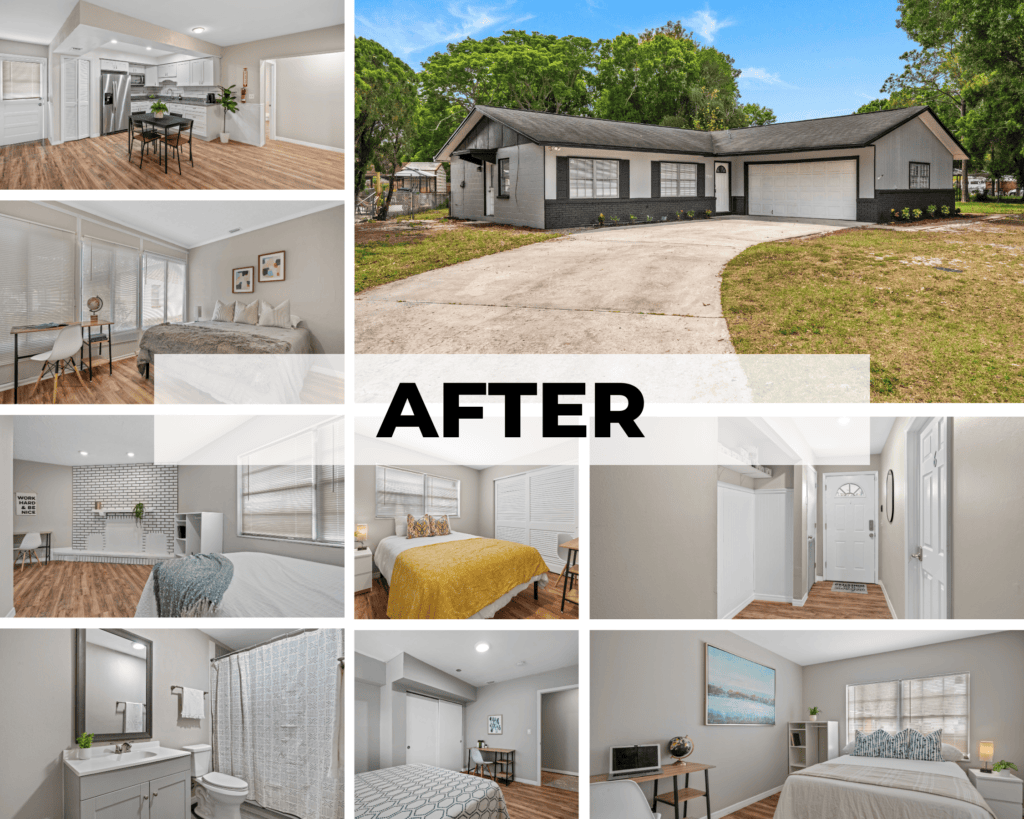
One of our properties in Tampa was purchased for $305,000, with roughly $75,000 put into renovation and conversion. We took it from a 3-bedroom, 2-bath layout to an 8-bedroom, 3-bath. We utilized space inside the home to add 4 bedrooms and a full bath, while another extra bedroom was added into the garage.
Over the past three years, it has averaged over $90,000 per year in gross rent, maintained a 5.0-star rating, and remained consistently occupied even in one of the most saturated PadSplit zip codes in the area. That kind of performance is possible, but it depends heavily on choosing the right property and operating it well.
If you want a deeper look at how PadSplit works in practice, including my specific experience and performance metrics, you can read the full breakdown here:
→ a deeper look at how PadSplit investing works in practice

Finding PadSplit deals
This is often the hardest part. Because not every property works for the model, the pool of viable opportunities is smaller than it looks on the surface.
Most investors rely on a combination of:
- Wholesalers
- Investor-friendly agents
- Off-market outreach
Building relationships in those channels is important, especially with people who understand what makes a property a good fit for PadSplit. But even with strong relationships, there’s still a challenge.
Deals are often distributed broadly, without much distinction between a standard investment property and something that fits a more specific model like PadSplit. Sometimes the seller isn’t educated on that specific exit strategy, but outside of PadSplit’s own marketplace, PadSplit deal flow can be hard to find consistently.
A more intentional way to find opportunities
PadSplit deals are a niche. The investors looking for them are, too. When those deals are distributed in the same way as everything else, they don’t always reach the right buyers at the right time.
That’s where a more structured approach becomes useful.
Real estate investment platforms like Wholster allow deals to be categorized more intentionally so a property that fits the PadSplit model can be surfaced to investors who are actively looking for that type of opportunity.
Instead of relying entirely on broad outreach, it becomes easier to stay connected to relevant deals as they become available.
If you want to explore that side further, you can find a breakdown here:
→ find PadSplit deals with Wholster
Final thoughts
PadSplit offers a different way to approach rental investing. The income potential is strong, but it comes with a different set of considerations, both in how properties are selected and how they’re operated. For investors willing to understand the model and build around it, it can be a highly effective strategy.
And as more people enter the space, the advantage will come from not just understanding PadSplit but staying connected to the deals that actually make sense.
Interested in becoming a PadSplit host?
Learn more about the model and create your host account.